Thanksgiving coastal storm brings flood and wind warnings to the East
NOAA warned of heavy rain, strong winds and coastal flooding as the holiday storm moved up the Eastern Seaboard.
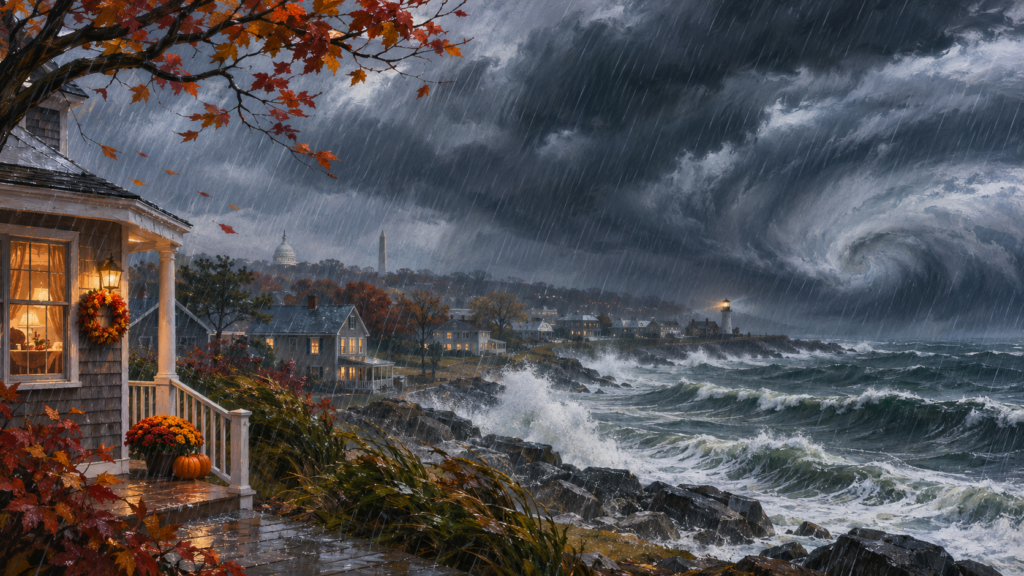
A powerful Thanksgiving coastal storm brought heavy rain, damaging wind risk and coastal flooding to parts of the eastern United States. The National Weather Service issued warnings and advisories from the Carolinas toward southern New England as the system moved north. The impacts extended beyond a wet holiday: high water and downed trees can make roads unsafe into Friday.
Where the hazards are concentrated
The Weather Prediction Center’s November 26 storm summary described rain and wind along the East Coast and coastal flood alerts over a broad stretch of shoreline. NWS Philadelphia listed high-wind, flood and coastal-flood warnings for parts of its forecast area. Hazard severity varies by county and tide cycle, so a regional headline is not a substitute for a location-specific warning.
In a Thursday evening NWS alert, low-lying areas along tidal waterways in parts of New Jersey and Pennsylvania faced one to two feet of inundation above ground level. The alert warned that some roads could become impassable and said the coastal flood warning would run into Friday evening for those named areas.
Why travel remains difficult
Heavy rain can hide the depth of standing water, while gusts can bring down branches and power lines. Flooded tidal roads can remain affected even after the heaviest rain passes. The NWS explicitly advises drivers not to enter floodwater and to follow local emergency managers’ directions.
The storm also prompted the move of Macy’s parade in New York to Saturday. That decision illustrates how the weather has disrupted events as well as transport, though conditions in one city should not be generalized to the entire region.
What to check next
Readers should use weather.gov for their exact address, including any flood, high-wind or marine alerts, and local transportation agencies for closures. If travel is optional, wait for a current route assessment rather than relying on a forecast made before the storm arrived.
The Weather Prediction Center’s summary is a snapshot of a changing event. Updated local warnings and observed conditions are the best guides for decisions on Friday.